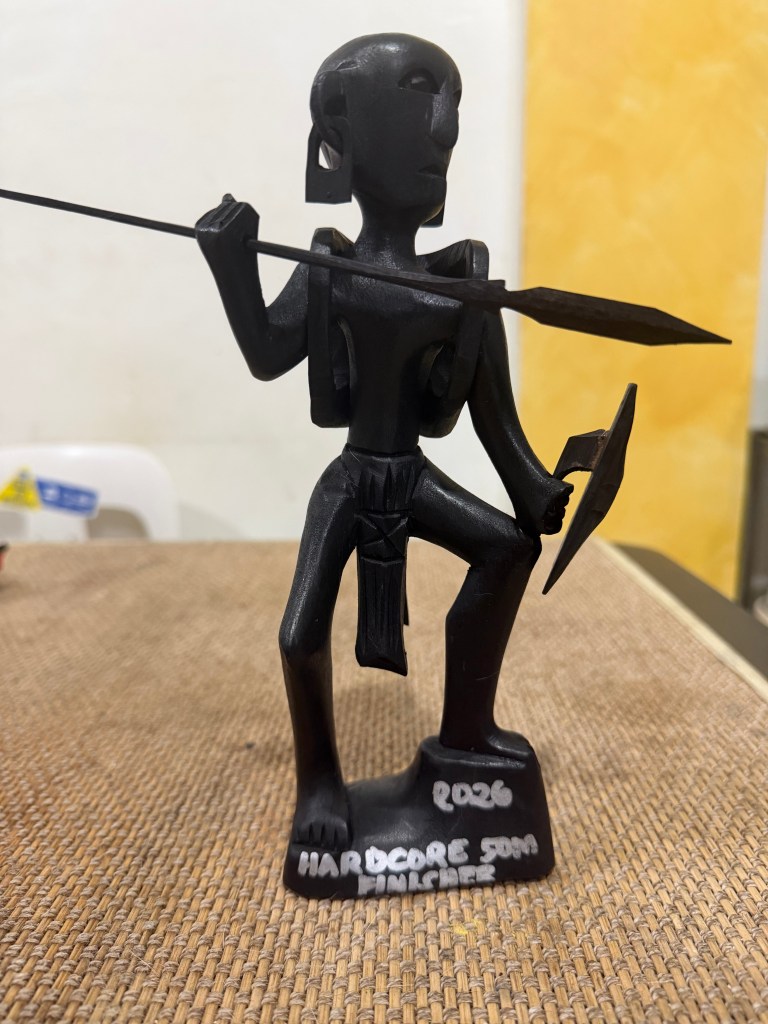

“I’m not the strongest. I’m not the fastest. But I’m really good at suffering.” – Amelia Boone
The gun started, and 58 runners ran for the first station of the 50 Mile race; it was 9 in the evening, and the cold air in the mountainous town of Kayapa was breezing the runners, a welcome reprieve from the sweltering heat of Metro Manila.
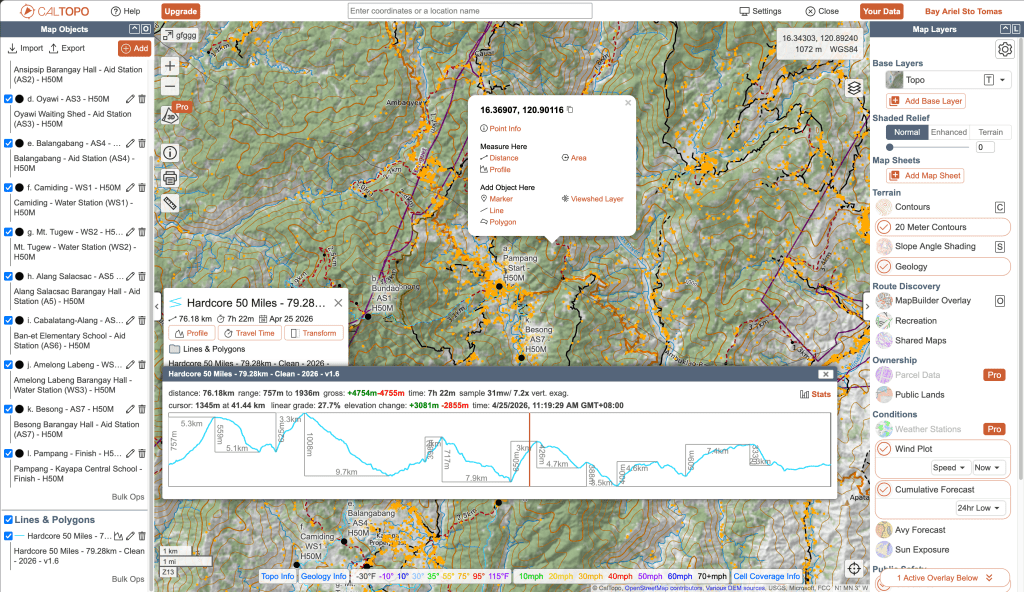
The race was exactly 76.18KM with an intermediate cut-off of 9:00 in the morning at Oyawi, and 1:30 in the afternoon at Alang-Salacsac. The course has a total elevation gain of 4,754 meters.
Last year, I ran 60KM in this race, with my calves burning, as I have not had practiced running. I got my lesson; since then, I ran on roads.
Running was the least of my favorite activities. Back then, I could not see the reason on why I would need to run. I could walk through the race, at least, and jog slowly at the flats at most. Now, running was a necessity. I want to finish a longer distance race; walking would not cut it.
I also practiced longer trails, during 2025 and 2026. Nutrition was also dialed in, supposedly.
Come Bundao, the first part of the race, my stomach hurt on the uphill. I never experienced this before. I endured the ascend; most runners overtook me; I overestimating my ability. This must be bonking, methinks. No, I ate too much, more than I used to. I also drank two pieces of Yakult, hoping that my bowel would get loose before gun start. Well, it did, but my mistake was drinking beer because one of my hike mates got tensed because he registered on the 38Km category; the Philippine Mountain Trail Festival was his second race. That did it, my gut got issues as well as lack of sleep—- darn it! I could not do anything about it.
No matter how good your training is, no matter how dialed in your gear, one mistake could ruin your chance in finishing an ultra.
One of my acquaintances, Ruel, and Jeyps, asked me if I was all right. I said yes, and they passed me. The training for a month almost got down the drain because of this crucial mistake.
Luckily, there was a bush that was tall enough for a man to sit; there and then, I did my deed. It was liberating: The issue boiling down inside came bursting down; and the moment you knew it, you felt light, invigorated even. It was as though one consumed energy gel. When one was almost bonking on the uphill, he/she was so energized that he could ran on that uphill.
After doing it, I recognized a familiar voice. It was Karmela! I met her during the Cabangan Mountain Trail Festival last February. We accompanied each other on the whole duration of that race, as well as this race. We past Bundao, and Indupit.
As the night passes by, we experienced sleepiness, the one thing that we did not consider during our training . We found out that walking was not ideal, as it could induce sleepiness. Heck, I walked while my eyes closed! Thus, we jog. Going to Oyawi was not an easy task. The trail got so confusing that we got lost for a couple of kilometers because we tailed a purported runner who went uphill suddenly vanished. We got called out by a runner who heard our poles, and chased us to point to the right direction. Thank you, runner!
Oyawi was a long, downhill going to the rice terraces and onion fields. Going to the intermediate cut-off felt like forever.
Oh, did I mention the chafe on my butt cheeks that I suffered? That was hella painful, because I had not had tested the compression shorts before the race, as it arrived two days before. Another mistake.
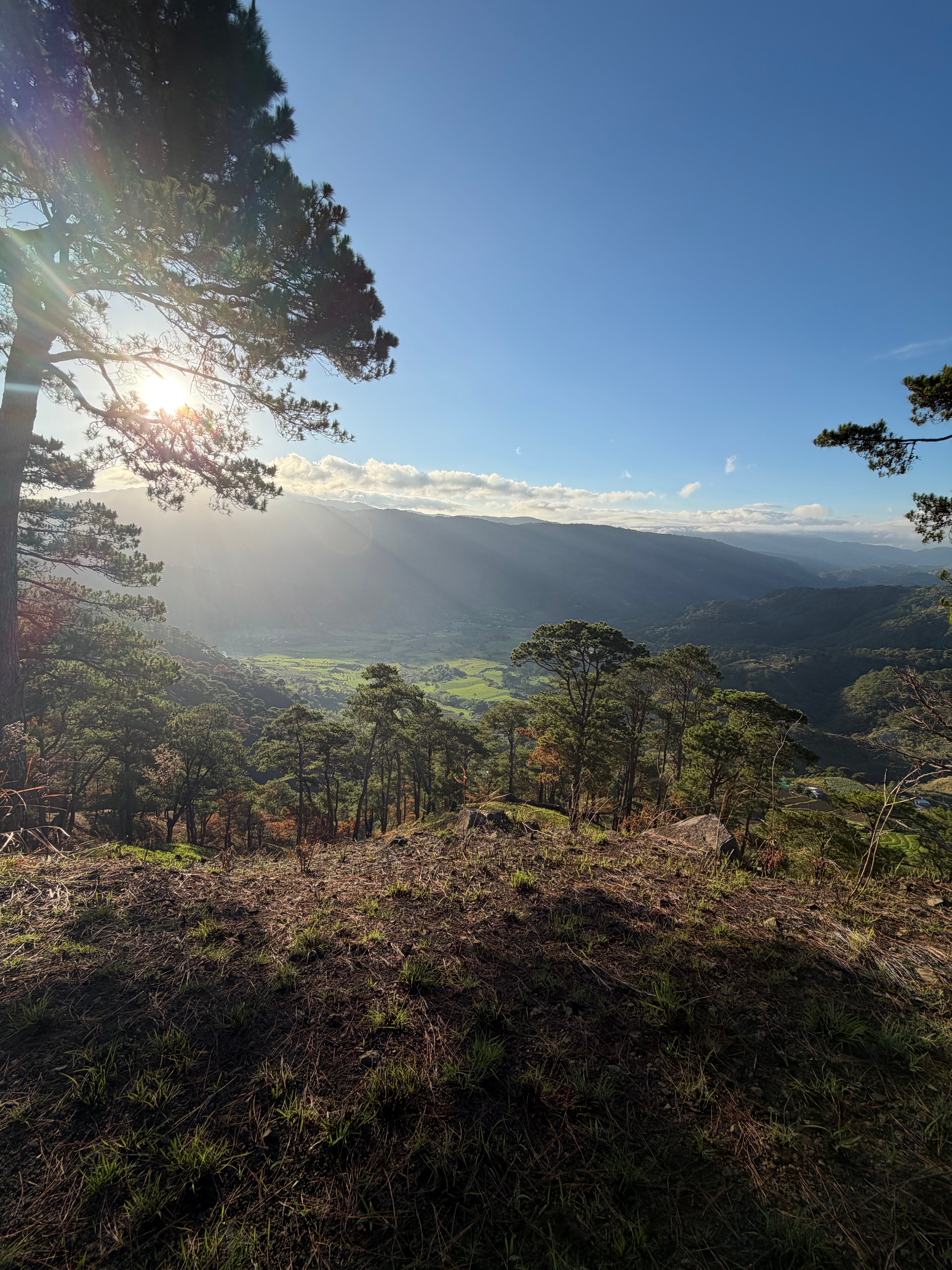
We arrived at Oyawi at about 3:30 in the morning, more than 6 hours after gunstart. On to Balangabang. To me, this was the most scenic hike of the race, for we saw the dawn broke here . The sunrise that passes through the pine trees were an eye candy to look at! This was the beauty of the cordilleras: No matter how arduous the climb is, when sunrise arrives, it was like seeing the sun for the first time.
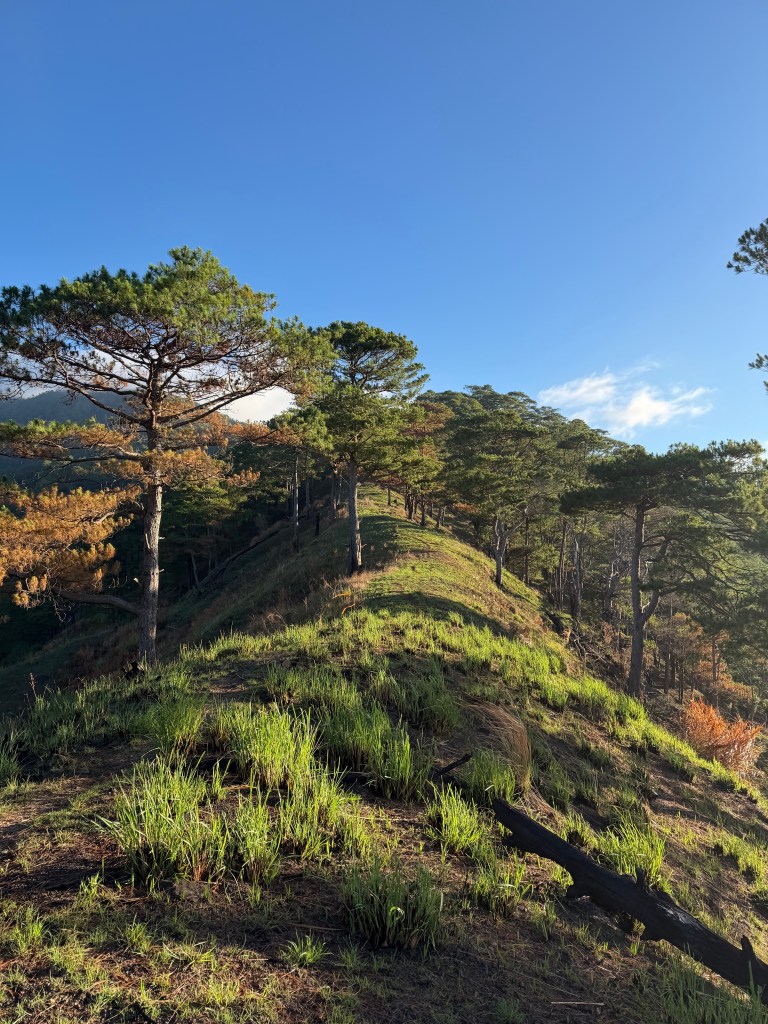
The ridge also consisted of uphills, and lots of cow dung. In my mind, this place must be used for grazing cows of the locals. The open ridge also overlooked the barangay of Camiding; the view was breathtaking that we stopped and took pictures of the valley below, with the early sunlight shining down the valley. This was a 1,000m descent going to the rice terraces; a long, flat trail which runners could take advantage of so as to save time. We got to the Camiding water station by 7:00 in the morning.
Our sleepiness wore off on that day, too. Next off, Mt. Tugew. Experienced runners had a hard time traversing Mt. Tugew. Not only runners normally climb it during late in the morning, but also they have to traverse a 600m mountain. Good thing about Mt. Tugew was that this side was always windy. I love ascents! I do not know why I feel exhilarated when navigating the uphill. Maybe it could be the sound of your heart, beating loud, and your lungs inhale as though there was no tomorrow. I do not know.
We got to the summit by 9:00 in the morning. Karmela said we could not reach the cut-off line, since we were still at Kilometer 42, and there is 34KM more. I said, we could still make it as long as we continuously running/hiking.
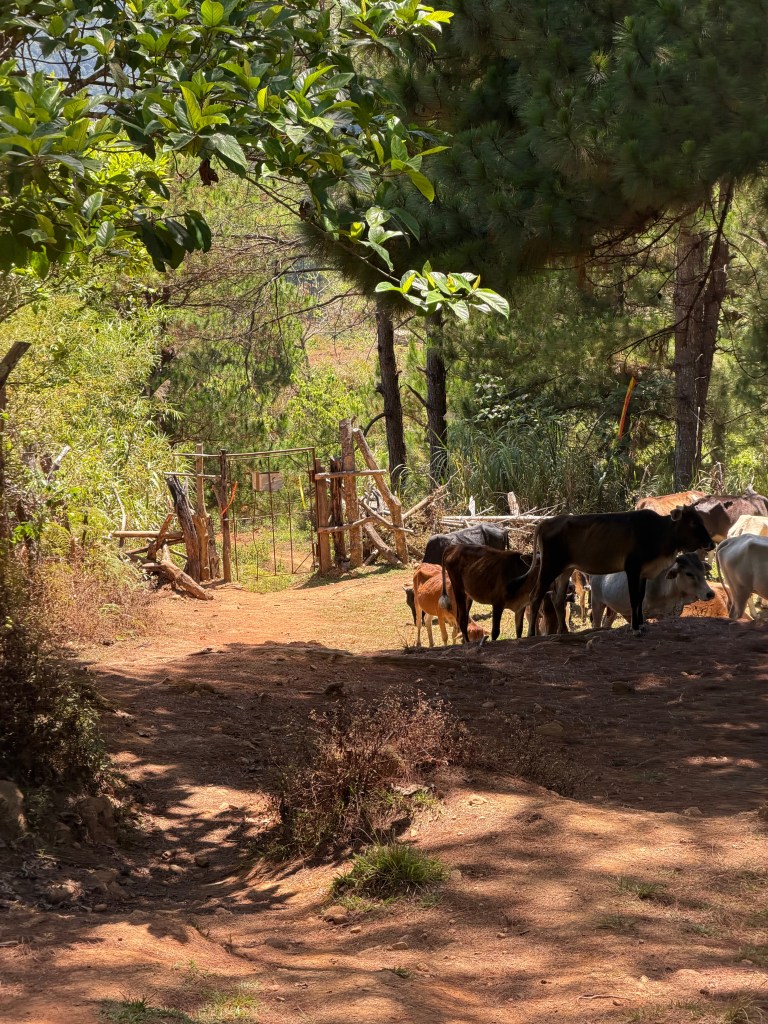
Like Balangabang, the trail going down to Alang-Salacsac is gradual downhill, and most of it is flat. So, one needs to run this segment so that he/she can reach the intermediate cut-off time. Mt. Tugew was also being used by the locals to feed their cows some grass. As a result, there was a fence on there. And the cows, especially the calves, looked at us with curiosity. We got stuck with the blockade of cows. Luckily enough, Richie, and Shayne came. They were in the middle pack, and ran the flat sections of the race. Good thing, he advised us to proceed to the gate, and so we did.
Passing that junction we traversed the cemented road going to the jump-off of Mt. Tugew. We arrived 10:30 in the morning. We ate there especially the egg, noodles, and other carbs to survive the final leg of the race: The dreadful Amelong Labeng. Little did we know that there was a more formidable trail than Amelong.
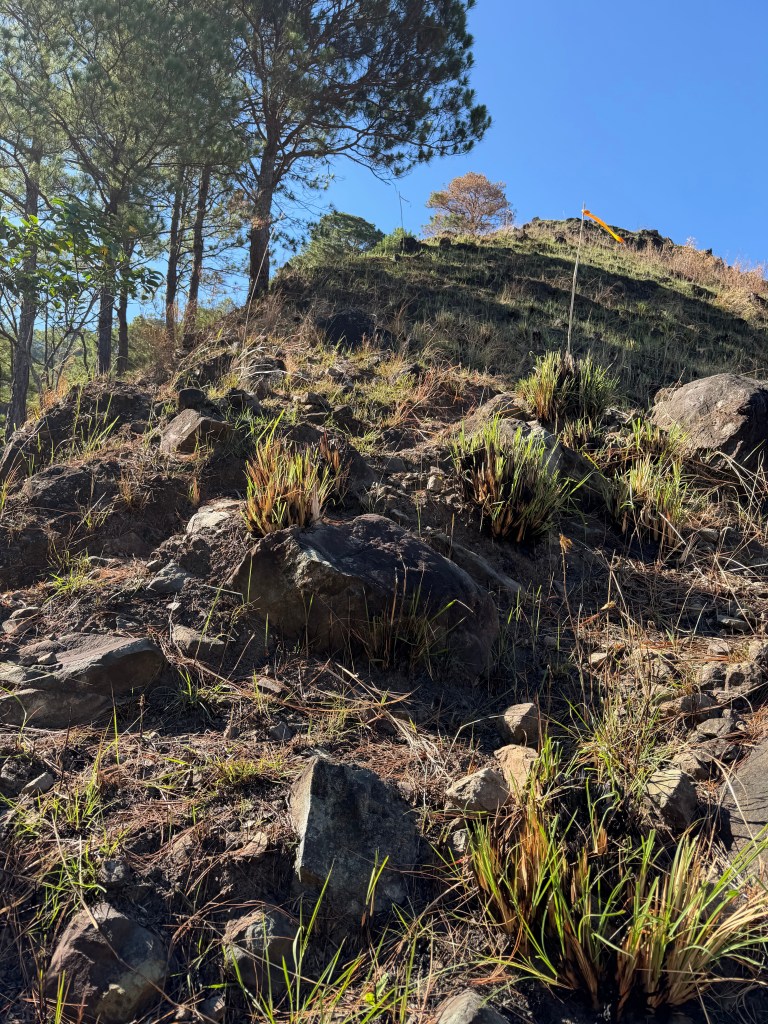
The never-ending ascent to the summit of Mt. Tugew 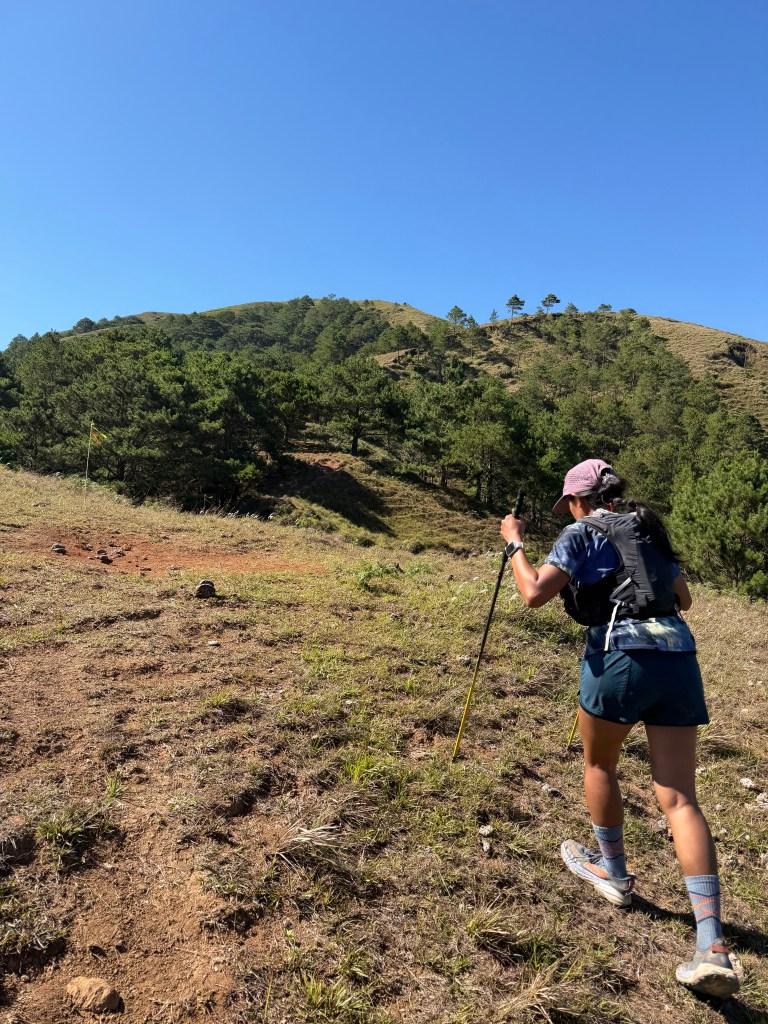
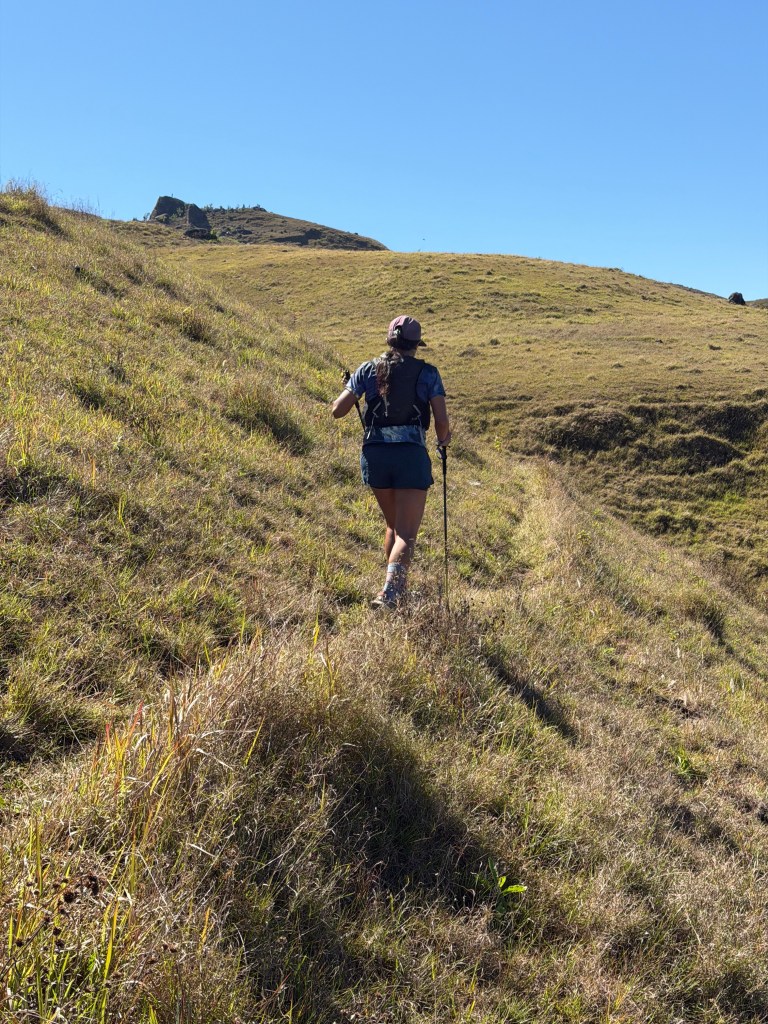
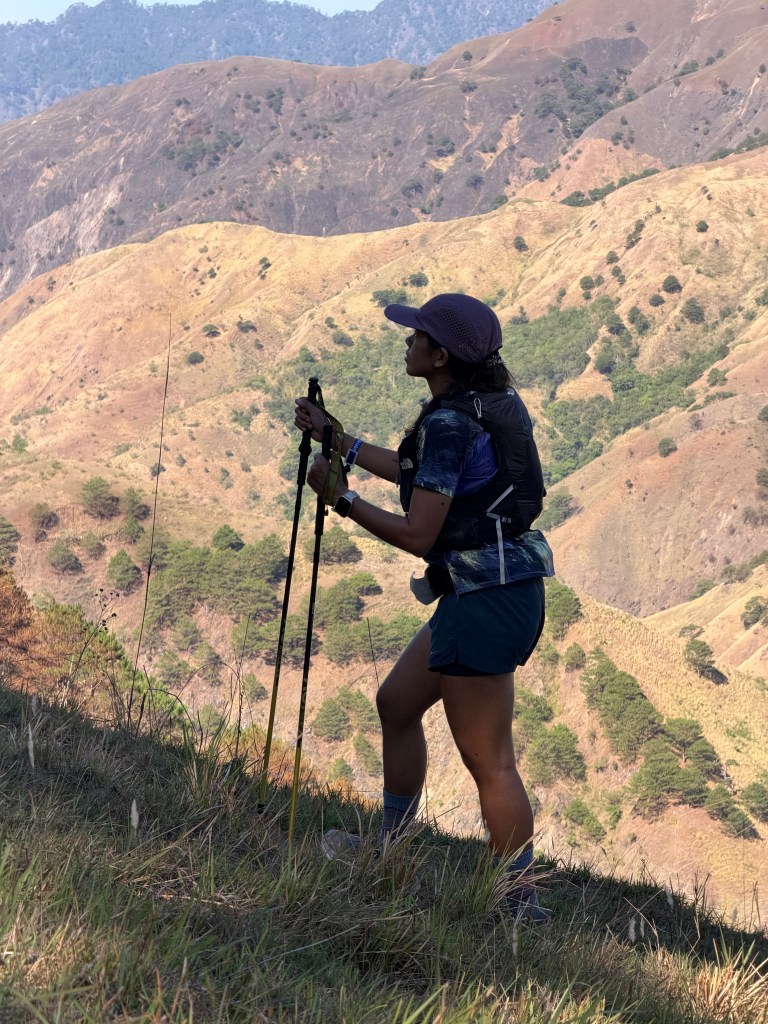
Second to the last segment was Calabatang-Alang, it was consisted mostly of pine trees at the top of the mountain, and grass. However, the difference between Mt. Tugew, and Calabatang was the former was windy, and the latter was sweltering. It was akin to Metro Manila being transferred somewhere in the Cordilleras. It has a micro climate for some reason!
At 12:00 noon, we negotiated an unnamed mountain, and during the incline, we spotted Kuya Jun, a senior citizen runner, resting under a tree. Despite the winds blowing, the heat was intense. Worse was that trees were sparse in this mountain. As such, you need to negotiate the ridge—- this portion was a ridgeline—. The only thing that grows there were the talahib grass, and pitcher plants.
The water inside our soft flasks was near depleted, despite that we drank a lot of water and juice from Alang-Salacsac. I cursed this segment as the ridges were almost endless: When you think that it was over, wait till you see another hill would tower on the horizon. Kuya Jun went ahead of us, and Richie was behind us. We found a small shrub beside a cliff, and we took shelter, taking a break from the extreme heat.
The chafe became so painful that squatting was unbearably hard to do. However, squatting was almost god send in this kind of race.
Karmela almost gave up and told us that we should leave her there, as her heart rate was near maximum. We told her there would be no rescue here because the terrain was harsh even for the locals. Convinced, she went with us and traversed this hell. Fortunately, we saw the downhill going to the community, and some trees that could provide some shade!
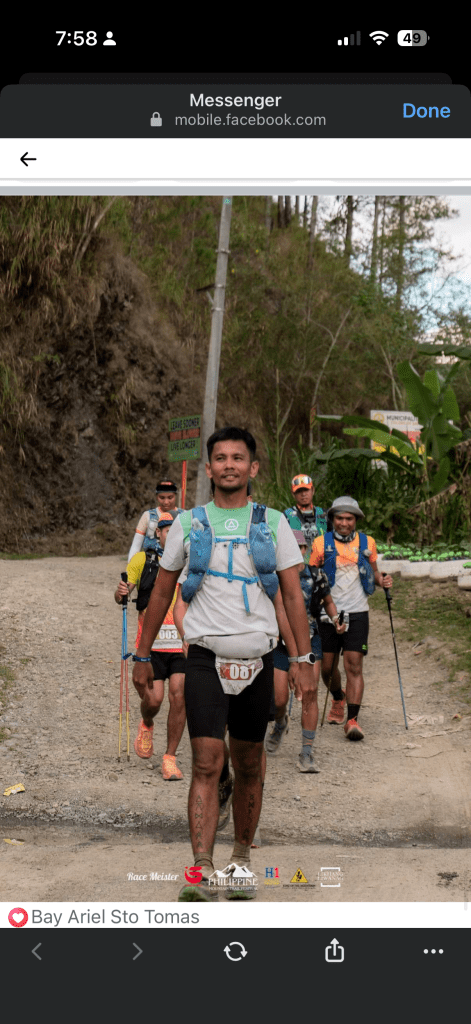
On the trail, we stumbled upon a GI roof walled house. We saw a small water container near the door. After traversing the scorching 10KM mountain, and we were thirsty, we knocked, asking for some water; however, no one answered. So we fetch water from the container. It was refreshing! We left the house, and a few minutes, we arrived at Calabatang-Alang Aid Station. We met other runners, the 100 milers on the station, in particular Ken and Jay. We rested for a few minutes because the heat was still intense, and Jay told we hike together.
Richie, and Shayne thought that we would not reach the cut-off because of the time spent in Calabatang. However, Jay encouraged them to continue because there was ample time left.
Unlike the 60k route, the Amelong Labeng side of this course was gradual uphill passing to the tower. Jay was leading our pack while the rest were behind. At this point, I could feel my tiredness creeping in, like what I felt on the first part of the race. I ate the few trail food that I left. Still, it could not assuage sleep; even so, we continued walking.
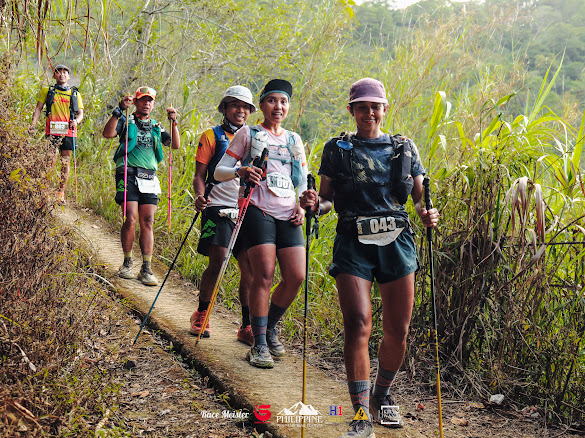
We arrived at Amelong Water Station at around 4:00 in the afternoon. Three hours remaining before cut-off. So, we refill our water flasks, and sped our way to the Finish Line. What I hate about Amelong Labeng is the cemented downhill. You must run downhill; otherwise, your knee would hurt if you slow down!
Shayne told that it was 5:00 in the afternoon, and we arrived at Besong. At last, the race was almost over! We could walk to the finish line, after all, it was only an hour walk. We reminisced what happened to us on the duration of the race. As for me, my chafe got so bad that walking was excruciating. Good thing, I did not register for 100 mile race. Else, I would be DNFed.
We finished the race at 6:26 in the evening. This race was not my best, but on hindsight, this race was a mental game: My legs were tired, my core were pretty shaken because of the long descent. But, the mental game was the toughest. Enduring the chafe for 18 hours was tough. The thoughts that we would reach the cut-off were looming around our minds. But we did not acted on that. thanks to Ken, and Jay.
I could not imagine finishing the race without them. To me, the group was pretty solid.
Ultras are not for the weak or the impatient. Ultras punished you for being too fast or too aggressive early on. To be successful, one must be patient, and endure all the obstacles that the course will throw against you. There will be hiccups along the way, because the perfect execution of one’s plan is rarely attainable, but the important thing is, how you solve it within the timeframe given to you.
Victory favors the prepared and resilient.